
Youth Award Grant Coastlines, Kayaks, and Shooting Stars: A Duke of Ed Gold Expedition
Eight students from Hamilton Christian School were awarded an FMC Youth Award Grant: a cash grant to go towards their Gold Duke of Edinburgh Award Expedition.
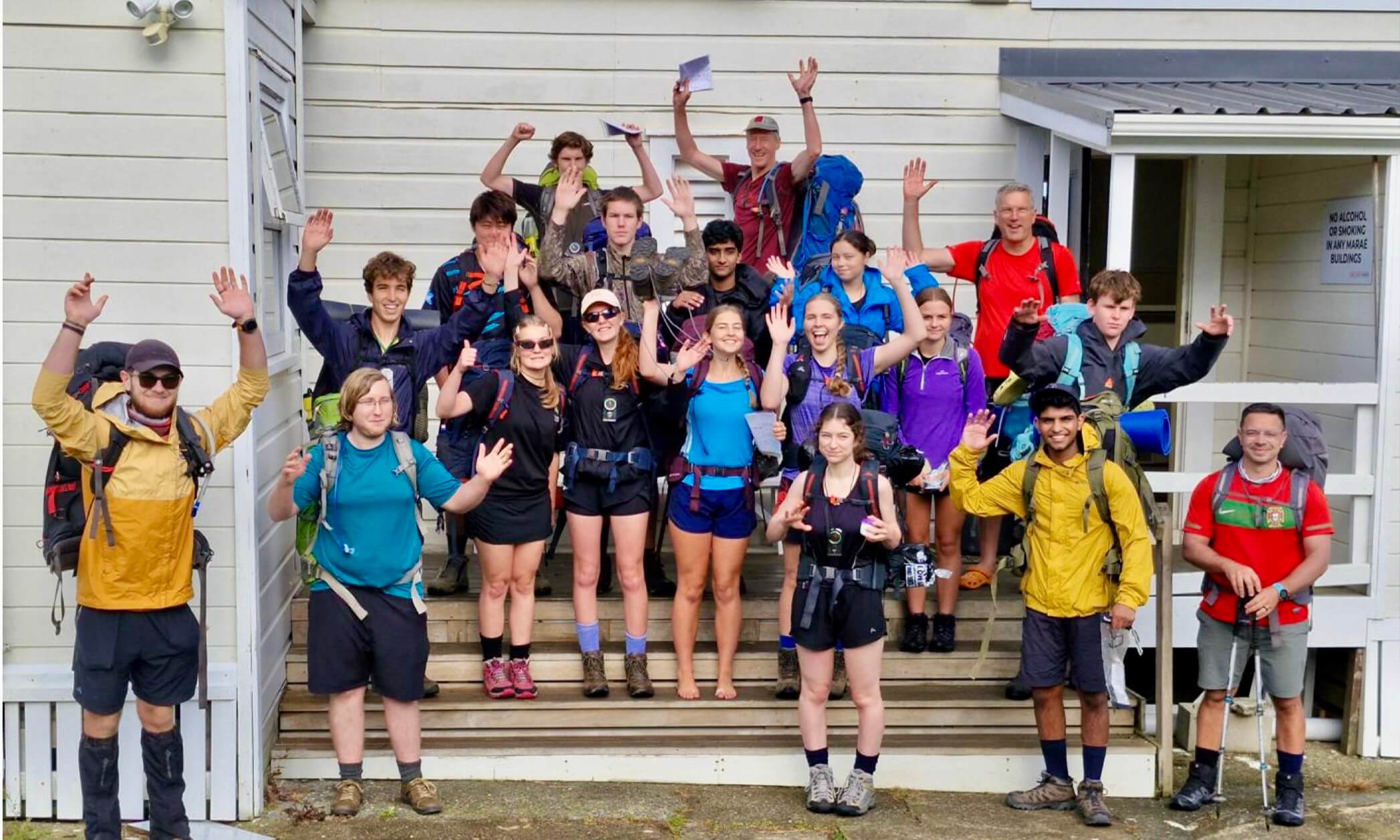
Eight students from Hamilton Christian School were awarded an FMC Youth Award Grant: a cash grant to go towards their Gold Duke of Edinburgh Award Expedition.
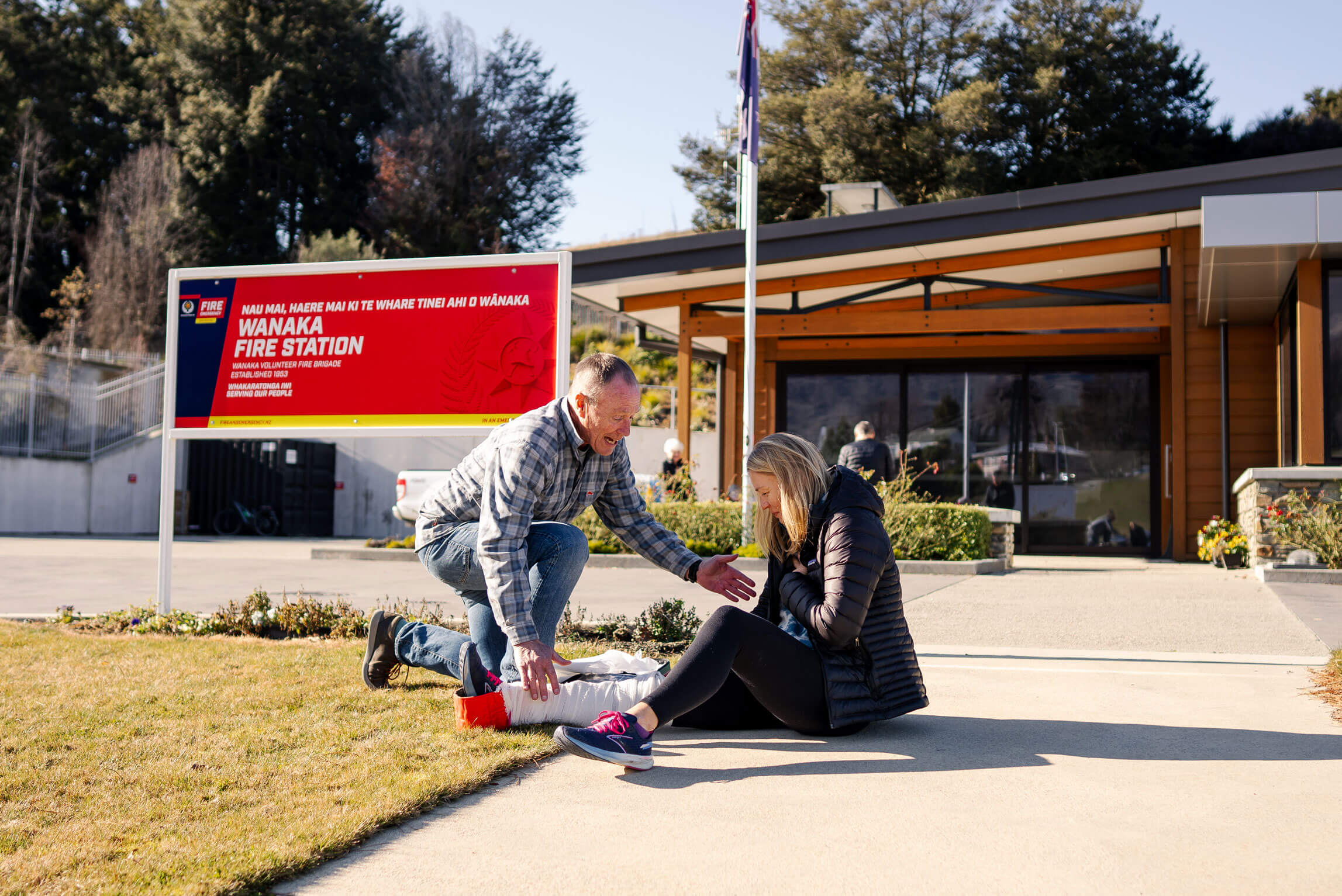
By the Upper Clutha Tramping Club On Sunday, August 10, 2025, the Upper Clutha Tramping Club held a full-day Outdoor First Aid Course in Wānaka, led by tutor Sam Worps from Peak Safety. The course was attended by twelve members, including both current and aspiring trip leaders, and was made possible through the [...]

As students and outdoors enthusiasts, members of the Otago University Tramping Club dedicate their free time to more studying – this time learning Outdoor First Aid to effectively manage any backcountry emergency. Through the FMC Training Grant, strapped for cash students can learn outdoors skills while still affording their university fees.

New Zealand’s wildlife is precious, and everyone who lives and travels here has a responsibility to look after it. As kaitiaki and guardians of our land, we all have a shared responsibility to look after our place and help others to do the same. Developed during their recent Recreation Sector Hui, the Department of Conservation offers some simple things to remember when visiting our wild places.

Ten teenagers set out for a three-day mission in Hakatere Conservation Park after receiving a FMC Youth Award Grant. With a challenging river crossing and inclement weather, these students apply their backcountry training to safely complete their Duke of Edinburgh Silver Qualifying Adventurous Journey.

Does increased mobile coverage through SpaceX and One NZ mean the end of backcountry solitude? Or will enhanced communication result in more lives saved when lost or injured? Outdoor education student and backcountry enthusiast, Josephine Tarasiewicz, explores these challenging questions as New Zealand stands at a pivotal point of connection.

"Everyone with an interest in any outdoor activity should go on this course – it really is tailored to outdoor emergency situations and how often do we actually practice first aid in the backcountry?" Ten members from the Palmerston North Tramping and Mountaineering Club cash in on the FMC Training Grant and enroll in an outdoor first aid course to gain competency in responding to backcountry accidents.

Have you ever wondered how search and rescue works when there is an emergency, as well as who exactly pays for their efforts? LandSAR Dunedin volunteer, Matteo Scoz, breaks down the two coordination authorities for search and rescue, how they are funded and the prevailing philosophy that guides these incredible organisations and their teams.

With recommendations from Alastair McDowell after his record-breaking climb of Mt Aspiring Tititea, Andy Carruthers and crew plan their own summit of this incredible maunga. Four days in Mt Aspiring National Park not only offer the team breathtaking views and a birthday bubbles celebration at the summit, but also key takeaways into how they could minimise 'the scary moments' and maximise safety and comfort the next time around.

Do you feel confident with crossing a river? With New Zealand's abundance of rivers, every backcountry tramper must know how to safely cross a waterway if the situation requires. With expert teaching from Outdoor Training NZ (OTNZ), the Rotorua Tramping Club fine-tunes their navigational skills and goes deep into hands-on learning with group and solo pack-floating, entrapment and how to escape from a strainer.

In an attempt to alleviate friction between members of the backcountry touring community and ski area operators, FMC created a set of backcountry touring access guidelines. With the support of NZAC and after consultation from 23 ski areas in Aotearoa, these collaborative guidelines articulate the following: how to behave when accessing backcountry terrain using ski field infrastructure, an intention to promote understanding of the real hazards present on ski areas and a fostering of courtesy and respect between tourers (including climbers and trampers) and ski area operators.

How do you get a decent brew at altitude? Uncle Jacko experiments with the science behind spuds for energy and a summit brew-up, along with discussing the perks of night-time tramping and reminiscing about a tramp with a dear mate who passed away.

Are loopies, by definition, indestructible and how do we create a model to better understand risk in the outdoors? Uncle Jacko poses the argument that while there are exceptions to the rule, ill-equipped trampers often seem to survive and explains the idea behind the Heine–McFarlane–McNeill risksetting model that he helped to design.

Four hours to cover one kilometre . . . ? For Megan and a hardy group from the Wellington Tramping and Mountaineering Club (WTMC), an escape route provided by the '1996 Tararua Footprints Guide' offered refuge away from strong winds. However, an equally challenging battle ensued between tramper, scrub and river as the group navigated untracked leatherwood in the Tararua Forest Park.

Looking for a more affordable way to purchase gear? Uncle Jacko discusses the versatility of retired poly-cotton office shirts, the best sources for weather prediction and PLB features that can save the life of an incapacitated, solo tramper.

Completion of the Great Walks may lead less experienced trampers into a false sense of security, resulting in some attempting backcountry tracks beyond their skill sets. After finishing the Tongariro Alpine Crossing and Abel Tasman Coastal Track, a young tourist sets off on the Cascade Saddle in Mt Aspiring National Park. Under snow cover, Cascade Saddle is a serious alpine crossing that requires outdoor competence and proper equipment. Johnny Mulheron discusses the tragic details behind this solo tramper's fatal fall in winter conditions and what lessons we can take away.

Has your compass ever steered you in the wrong direction? In this UJCC, Uncle Jacko divulges what happens when one's faithful compass becomes an agent of chaos, how much water and electrolyte intake one really needs and some handy, DIY gear hacks for the backcountry.

'Though plenty of inexperienced day walkers happily climb Taranaki, the mountain is still one of the most deadly in New Zealand. For many, the northern summer route is their surest way to safely experience climbing Taranaki.' Seasoned mountaineer, Peter Laurenson, provides foundational advice for minimising trouble and maximising fun on Mt Taranaki this summer.

“What may seem to be a safe situation is only one mis-step away from catastrophe.” In an alpine environment, even one small error can lead to a life or death situation. A false sense of security coupled with an unfortunate event results in a tragic outcome for one mountaineer on Mount Ruapehu.

“By the end of the weekend, we were like a well-oiled machine.” As recipients of the 2022 FMC Training Grant, members of the Wellington Tramping and Mountaineering Club shift from uncertainty to competency during their wilderness first aid weekend training.

What makes a suitable alpine leader and how do you identify these people in your club? New Zealand clubs have a proud tradition of passing on knowledge to newer members who later themselves become leaders. FMC provides a guide to identifying and supporting not only current alpine leaders, but a framework to raise up the next generation.

A cascade of poor decisions – lack of experience, a hyperfocus on reaching their destination despite horrendous conditions and the separation of party members – results in the preventable loss of a young woman left behind on the Gillespie Pass. Examining the events leading up to this tragedy, Johnny Mulheron and Erik Bradshaw offer sound advice for trampers heading off the beaten path of the Great Walks.

A close call occurs on Jagged Peak with one climber undergoing a serious accident, successful helicopter rescue and lengthy recovery. Heather Rhodes joins Vaughan Snowdon and Simon Bell to attempt Jagged Peak in the Arrowsmith Range of South Canterbury, resulting in a 300m fall.

In 1934, two Canterbury University Tramping Club members were the subjects of an intense search after not reaching their destination. Shaun Barnett compiles their stories found in multiple newspapers from the period, in which the men recount their harrowing ordeal.




Copyright is held by the writer/creator. Licensed under Creative Commons Attribution-Non Commercial-NoDerivs 3.0 NZ